
Food Security Act Amendment: Why AAY Families Could Face Ration Cuts
ఆహార భద్రత చట్ట సవరణ: AAY కుటుంబాలకు రేషన్ కోత ఎందుకు ఆందోళన కలిగిస్తోంది?
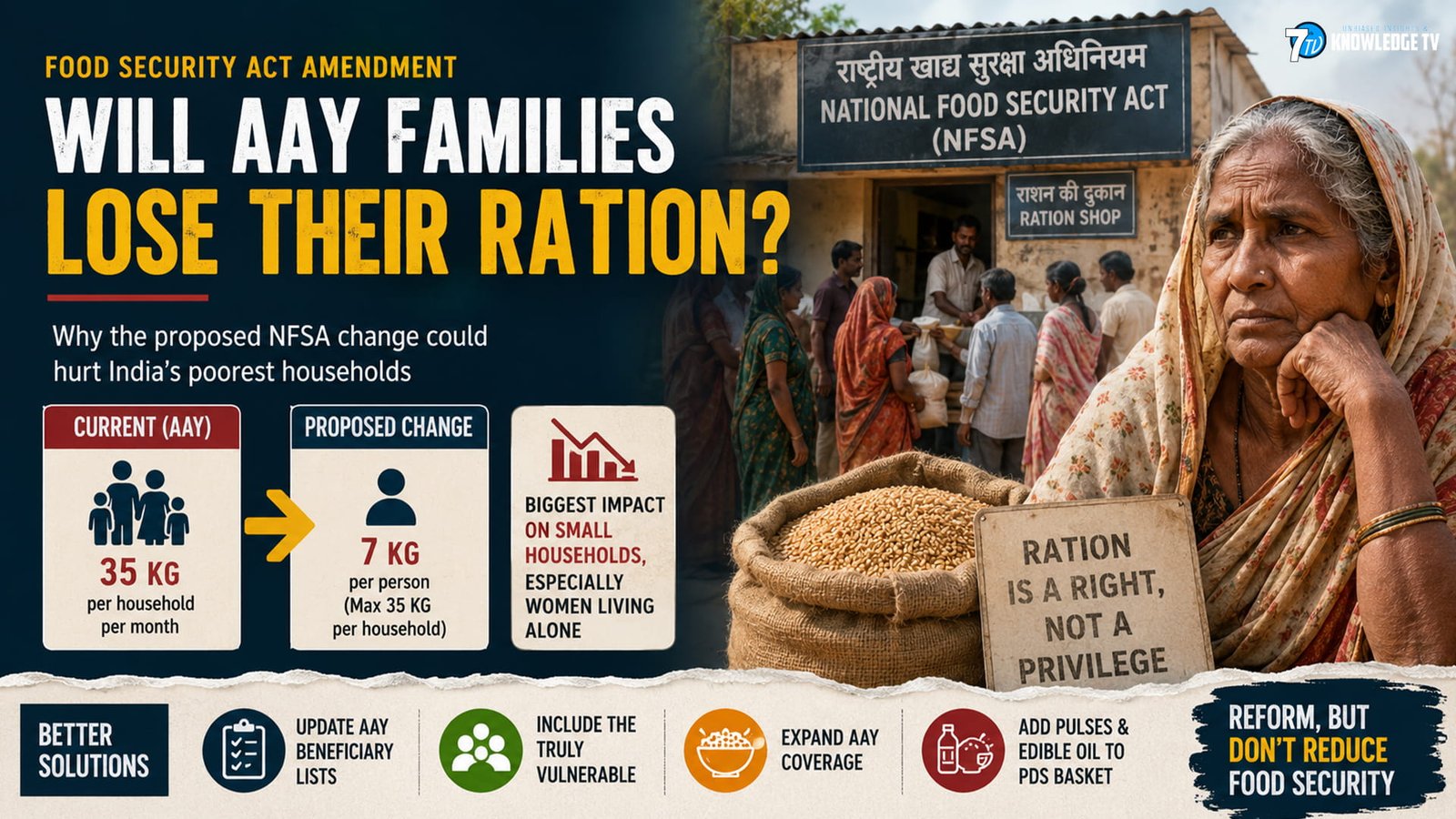
A proposed amendment to the National Food Security Act (NFSA) could change how foodgrain entitlements are calculated for Antyodaya Anna Yojana (AAY) households. The proposal would replace the existing 35-kg monthly household entitlement with 7 kg per person, subject to a maximum of 35 kg per household.
జాతీయ ఆహార భద్రత చట్టం (NFSA)లో ప్రతిపాదిత సవరణ అమల్లోకి వస్తే Antyodaya Anna Yojana (AAY) కుటుంబాలకు రేషన్ అందించే విధానంలో మార్పు రావచ్చు. ప్రస్తుతం కుటుంబానికి నెలకు 35 కిలోలుగా ఉన్న కోటా స్థానంలో వ్యక్తికి 7 కిలోల చొప్పున, కుటుంబానికి గరిష్ఠంగా 35 కిలోల పరిమితి విధించే ప్రతిపాదన ఉంది.
Why Antyodaya Anna Yojana Matters
Antyodaya Anna Yojana was launched in 2000 to provide special food security protection to India’s poorest households. The entitlement was initially 25 kg of foodgrains per month and was later increased to 35 kg. AAY rations are now provided free under the Pradhan Mantri Garib Kalyan Anna Yojana.
దేశంలోని అత్యంత పేద కుటుంబాలకు ప్రత్యేక ఆహార భద్రత కల్పించేందుకు Antyodaya Anna Yojanaను 2000లో ప్రారంభించారు. మొదట నెలకు 25 కిలోల ధాన్యాన్ని అందించగా, తరువాత దాన్ని 35 కిలోలకు పెంచారు. ప్రస్తుతం Pradhan Mantri Garib Kalyan Anna Yojana కింద AAY రేషన్ ఉచితంగా అందుతోంది.
The programme has particular significance for households with limited or no earning capacity, including elderly couples, widows living alone and vulnerable persons without adequate family support.
ఆదాయం సంపాదించే సభ్యులు లేని లేదా చాలా పరిమిత ఆదాయంతో జీవించే కుటుంబాలకు ఈ పథకం ప్రత్యేక ప్రాధాన్యం కలిగి ఉంది. ఒంటరిగా జీవించే వృద్ధులు, వితంతువులు, తగిన కుటుంబ సహాయం లేని బలహీన వర్గాలకు AAY రేషన్ కీలకమైన ఆహార భద్రతా ఆధారంగా నిలుస్తోంది.
What Will Change Under the Proposed NFSA Amendment?
Under the proposed system, an AAY household would receive 7 kg of foodgrains per person, with the total entitlement capped at 35 kg. A five-member household would therefore remain eligible for 35 kg, while smaller households would receive less than the current entitlement.

ప్రతిపాదిత విధానం ప్రకారం AAY కుటుంబానికి ఒక్కో వ్యక్తికి 7 కిలోల ధాన్యం లభిస్తుంది. అయితే కుటుంబానికి గరిష్ఠంగా 35 కిలోల పరిమితి ఉంటుంది. దీంతో ఐదుగురు సభ్యులున్న కుటుంబానికి 35 కిలోలు కొనసాగుతాయి. కానీ అంతకంటే చిన్న కుటుంబాలకు ప్రస్తుతం లభిస్తున్న పరిమాణం కంటే తక్కువ ధాన్యం అందే అవకాశం ఉంది.
The impact could be particularly significant because 53 per cent of AAY households have fewer than five members, based on the Household Consumer Expenditure Survey 2023-24 figures cited in the analysis.
Household Consumer Expenditure Survey 2023-24 గణాంకాల ప్రకారం AAY కుటుంబాల్లో 53 శాతం కుటుంబాల్లో ఐదుగురికి కంటే తక్కువ మంది సభ్యులు ఉన్నారు. అందువల్ల ప్రతిపాదిత మార్పు ప్రభావం ప్రధానంగా చిన్న కుటుంబాలపైనే పడే అవకాశం ఉంది.
Women Living Alone Could Face an 80% Reduction
Nearly one million women are reported to be in the Antyodaya category. Among them, 85 per cent are widows and 74 per cent are illiterate, based on the HCES figures cited in the article. For a one-member household, the proposed change would reduce the monthly entitlement from 35 kg to 7 kg.
Antyodaya కేటగిరీలో దాదాపు 10 లక్షల మంది మహిళలు ఉన్నట్లు గణాంకాలు సూచిస్తున్నాయి. వారిలో 85 శాతం మంది వితంతువులు, 74 శాతం మంది నిరక్షరాస్యులు. ఒక సభ్యురాలు మాత్రమే ఉన్న కుటుంబానికి రేషన్ 35 కిలోల నుంచి 7 కిలోలకు తగ్గితే, నెలవారీ ఆహార ధాన్యాల కోటాలో 80 శాతం తగ్గుదల ఏర్పడుతుంది.
For households living in extreme economic insecurity, the value of the ration may extend beyond direct food consumption. Surplus grain can also be exchanged or used to meet other household needs, making the entitlement an important economic resource.
అత్యంత ఆర్థిక అస్థిరతలో జీవించే కుటుంబాలకు రేషన్ విలువ కేవలం తినే ఆహారంతో మాత్రమే పరిమితం కాదు. అదనంగా మిగిలే ధాన్యాన్ని ఇతర అవసరాల కోసం మార్పిడి చేసుకునే అవకాశం ఉంటుంది. అందువల్ల AAY రేషన్ ఒక ఆహార ప్రయోజనంతో పాటు ఆర్థిక భద్రతకు కూడా తోడ్పడుతుంది.
Is the Amendment Really About Equity?
One justification for the proposed change is that it would reduce differences in per-person entitlements among AAY households. Jean Drèze challenges this argument, saying that reducing benefits for the poorest households in order to narrow entitlement differences does not necessarily amount to greater social equity.
AAY కుటుంబాల మధ్య వ్యక్తికి లభించే రేషన్లో ఉన్న తేడాలను తగ్గించడం సవరణకు ఒక కారణంగా చెబుతున్నారు. అయితే అత్యంత పేద కుటుంబాలకు లభించే ప్రయోజనాలను తగ్గించడం ద్వారా తేడాలను తగ్గించడం మాత్రమే నిజమైన సామాజిక సమానత్వాన్ని సాధించదని Jean Drèze అభిప్రాయపడుతున్నారు.
How Much Could the Government Save?
In 2023-24, AAY foodgrain offtake was around 8.8 million tonnes. Applying the proposed system to household-size data would bring estimated requirements down to about 7.6 million tonnes, implying potential annual savings of roughly 2 million tonnes.
2023-24లో AAY కింద సుమారు 8.8 మిలియన్ టన్నుల ధాన్యం వినియోగించబడింది. కుటుంబ పరిమాణాల ఆధారంగా ప్రతిపాదిత విధానాన్ని వర్తింపజేస్తే అవసరం సుమారు 7.6 మిలియన్ టన్నులకు తగ్గవచ్చని అంచనా. అంటే సంవత్సరానికి దాదాపు 2 మిలియన్ టన్నుల ధాన్యం ఆదా అయ్యే అవకాశం ఉంది.
The debate, therefore, is not simply about how much grain can be saved. It is also about whether such savings should come from reducing entitlements for households that were specifically identified for greater protection.
అందువల్ల ఈ చర్చ కేవలం ఎంత ధాన్యం ఆదా అవుతుందనే అంశానికే పరిమితం కాదు. అత్యంత పేద కుటుంబాలకు ప్రత్యేక రక్షణ కల్పించేందుకు రూపొందించిన పథకంలోనే వారి రేషన్ను తగ్గించడం సరైన విధానమా అనే ప్రశ్న కూడా ఇందులో ఉంది.
What Could Be Done Instead?
A stronger approach would be to review and update the AAY beneficiary lists. Older lists can contain both inclusion and exclusion errors, meaning some relatively better-off households may continue to receive AAY benefits while genuinely vulnerable families remain outside the programme.
దీనికి బదులుగా AAY లబ్ధిదారుల జాబితాలను పూర్తిగా పునఃపరిశీలించి నవీకరించవచ్చు. పాత జాబితాల్లో అర్హత లేని కుటుంబాలు కొనసాగడం, నిజంగా అర్హులైన పేద కుటుంబాలు బయటపడటం వంటి inclusion-exclusion లోపాలు ఉండే అవకాశం ఉంది.
Moving relatively better-off households to the priority category, without unnecessarily cancelling ration cards, could create room to include more genuinely destitute households. Expanding AAY coverage could also strengthen the programme.
ఆర్థికంగా కొంత మెరుగైన కుటుంబాలను అవసరమైన సందర్భాల్లో priority categoryకి మార్చడం ద్వారా, రేషన్ కార్డులను అనవసరంగా రద్దు చేయకుండా మరింత తీవ్రమైన పేదరికంలో ఉన్న కుటుంబాలకు AAY పరిధిలో చోటు కల్పించవచ్చు. అలాగే AAY పరిధిని విస్తరించడం ద్వారా పథకాన్ని మరింత సమర్థవంతంగా మార్చవచ్చు.
Another proposal is to consider adding pulses and edible oil to the PDS entitlements of Antyodaya households. Some states have already experimented with providing such additional food items.
Antyodaya కుటుంబాలకు PDS ద్వారా పప్పులు, వంట నూనె వంటి అదనపు ఆహార వస్తువులను అందించే అవకాశాన్ని కూడా పరిశీలించవచ్చు. కొన్ని రాష్ట్రాలు ఇప్పటికే ఇలాంటి అదనపు ఆహార సహాయాన్ని వివిధ సందర్భాల్లో అమలు చేశాయి.
Conclusion | ముగింపు
The proposed NFSA amendment could affect AAY households very differently depending on their family size. Larger households may remain close to the existing 35-kg ceiling, while one- and two-member households could face substantial reductions.
ప్రతిపాదిత NFSA సవరణ AAY కుటుంబాలపై వారి కుటుంబ పరిమాణాన్ని బట్టి భిన్నమైన ప్రభావాన్ని చూపవచ్చు. పెద్ద కుటుంబాలు 35 కిలోల గరిష్ఠ పరిమితి కారణంగా ప్రస్తుత స్థాయికి దగ్గరగా ఉండవచ్చు. కానీ ఒకరు లేదా ఇద్దరు సభ్యులు ఉన్న కుటుంబాలకు గణనీయమైన రేషన్ కోత పడే అవకాశం ఉంది.
The larger policy question is whether food-security reforms should prioritise uniformity or stronger protection for households facing the greatest vulnerability. Updating beneficiary lists, expanding AAY coverage and improving the quality of PDS support offer alternative ways to reform the system without reducing the basic food security of the poorest families.
విధానపరంగా చూస్తే, ఆహార భద్రతలో అందరికీ ఒకే విధమైన ప్రయోజనాలను కల్పించడమే లక్ష్యంగా ఉండాలా, లేక అత్యంత బలహీన కుటుంబాలకు మరింత రక్షణ కల్పించాలా అనేదే ప్రధాన ప్రశ్న. లబ్ధిదారుల జాబితాలను నవీకరించడం, AAY పరిధిని విస్తరించడం, PDSలో అదనపు ఆహార సహాయాన్ని మెరుగుపరచడం వంటి మార్గాలు పేద కుటుంబాల ప్రాథమిక ఆహార భద్రతను తగ్గించకుండా సంస్కరణలు చేపట్టే ప్రత్యామ్నాయాలుగా నిలుస్తాయి.
FAQs
What is the proposed Food Security Act amendment?
The proposal would change AAY foodgrain entitlements from 35 kg per household per month to 7 kg per person, subject to a 35-kg household ceiling.
ప్రతిపాదిత మార్పు ప్రకారం AAY కుటుంబాలకు ప్రస్తుతం ఉన్న 35 కిలోల కుటుంబ ఆధారిత రేషన్ స్థానంలో వ్యక్తికి 7 కిలోల చొప్పున రేషన్ ఇవ్వనున్నారు. అయితే కుటుంబానికి గరిష్ఠ పరిమితి 35 కిలోలుగా ఉంటుంది.
Who is likely to be affected most?
Smaller AAY households are likely to face the largest reductions, particularly one-member households.
చిన్న AAY కుటుంబాలు, ముఖ్యంగా ఒక సభ్యుడు మాత్రమే ఉన్న కుటుంబాలు, ఈ మార్పుతో ఎక్కువగా ప్రభావితమయ్యే అవకాశం ఉంది.
How much ration could a one-member AAY household receive?
Under the proposed formula, a one-member household would receive 7 kg instead of the existing 35 kg, an 80 per cent reduction.
ప్రతిపాదిత విధానం ప్రకారం ఒక సభ్యుడు ఉన్న కుటుంబానికి 35 కిలోల బదులు 7 కిలోల రేషన్ లభిస్తుంది. ఇది 80 శాతం తగ్గుదల.
Will five-member AAY households lose ration?
Under the 7-kg-per-person formula, five members would qualify for 35 kg, matching the proposed household ceiling.
ఐదుగురు సభ్యులు ఉన్న కుటుంబానికి 7 × 5 = 35 కిలోలు వస్తాయి. కాబట్టి ప్రతిపాదిత 35 కిలోల గరిష్ఠ పరిమితి కారణంగా వారికి గణనీయమైన కోత ఉండకపోవచ్చు.
What is AAY?
Antyodaya Anna Yojana is a food-security programme aimed at providing greater support to India’s poorest households.
Antyodaya Anna Yojana దేశంలోని అత్యంత పేద కుటుంబాలకు ప్రత్యేక ఆహార భద్రత కల్పించేందుకు రూపొందించిన పథకం.
What alternatives are being proposed?
The key alternatives include updating AAY lists, correcting beneficiary inclusion and exclusion errors, expanding coverage and considering pulses and edible oil under PDS support.
AAY జాబితాలను నవీకరించడం, లబ్ధిదారుల ఎంపికలో ఉన్న లోపాలను సరిచేయడం, పథకం పరిధిని విస్తరించడం, PDS ద్వారా పప్పులు మరియు వంట నూనె వంటి అదనపు వస్తువులను అందించడం వంటి ప్రత్యామ్నాయాలు సూచించబడ్డాయి.